
Where should a porta potty go on a job site or in a yard?
Start with the ground. ADA Standards section 302.1 calls for surfaces that are stable, firm and slip resistant, so skip the mud patch by the gate and pick packed gravel or pavement instead. A standard unit runs about 44 by 48 inches on the ground and stands roughly 92 inches tall, so give it clearance from overhead branches and low wires. Keep the door swing away from foot traffic and point it toward the site, not the street, for privacy. If you're placing near a construction site, leave a path wide enough for your pump truck to reach the tank without threading between dumpsters or temporary fencing. We handle placement across Cicero and out to Forest Park, about 4.7 miles northwest, and Brookfield, roughly 6.1 miles west, so the same rules travel with the truck. For events, check our event restroom rental guidance on spacing units for line flow. Homeowners doing a remodel should see our home renovation porta potty page for driveway-friendly spots that don't block a garage door.
Do I need a permit for porta potty or dumpster placement?
Maybe, and it depends on where the unit sits. Placement fully on private property usually needs no city sign-off, but anything touching the sidewalk, parkway or street requires checking with Cicero first; that right-of-way question is NOT VERIFIED here and needs confirming with the city before you set a unit at the curb. The same logic applies to a roll-off dumpster: a dumpster placement permit may be required if the container sits in the right-of-way, and dumpster placement permit cost varies by what the city actually requires, which we have not verified for Cicero. Read our dumpster permit requirements page before you order, and pair it with dumpster weight limits so the load stays legal. For porta potties specifically, our porta potty permit requirements page covers the same right-of-way distinction. When in doubt, set the unit on private pavement and skip the question entirely.
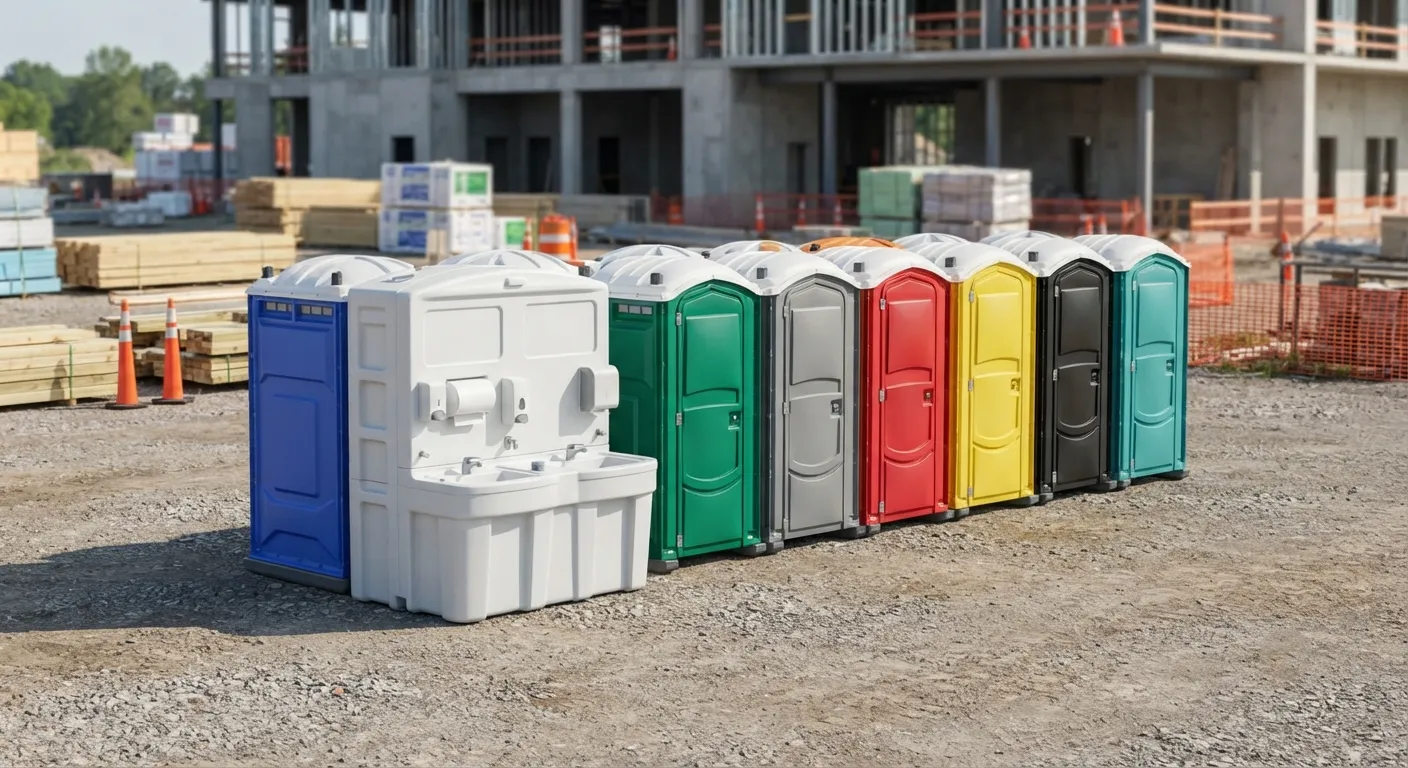
How many units do I need and where do they go relative to each other?
OSHA 1926.51(c)(1) sets the construction ratio: 1 toilet for 20 or fewer workers, then 1 toilet and 1 urinal per 40 workers up to 200, dropping to 1 per 50 above that. Space units so no worker walks more than a few minutes to reach one, and cluster them near breaks or a trailer rather than scattered at the far corners of the lot. If the crew is spraying paint, coatings, herbicides or insecticides, OSHA 1926.51(f)(1) requires washing facilities nearby, so a handwashing station rental or portable sink rental belongs right next to the toilet bank, not across the site. Farm crews fall under a different rule: OSHA 1928.110 requires field sanitation within a quarter mile walk, one facility per 20 hand-labor employees, which matters for farm and agricultural restrooms spread across acreage. Where units cluster, ADA Standards section 213.2 requires at least 5 percent to be accessible, never fewer than one, so place your ADA accessible porta potty unit at the front of the row, not buried in back.
What clearance does an accessible unit need?
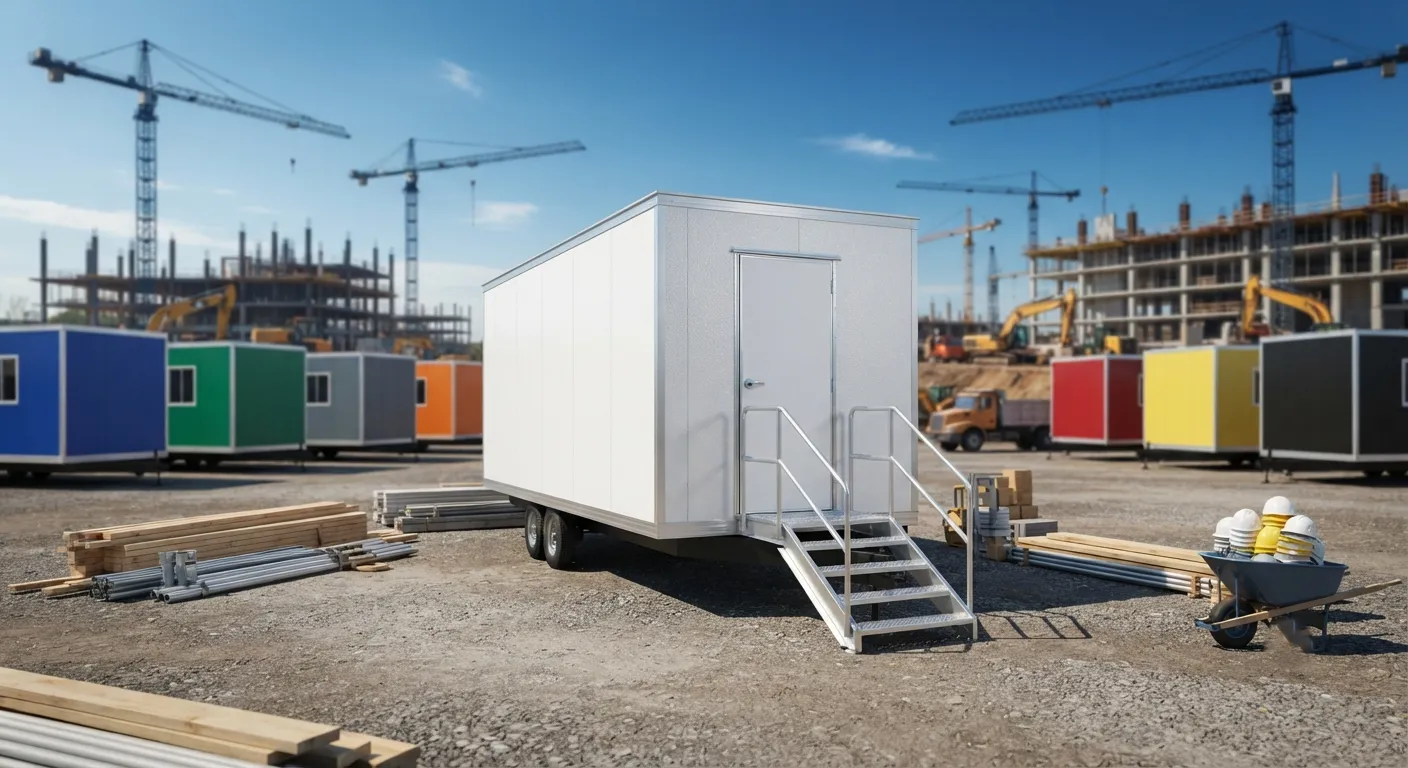
An accessible unit needs a 60 inch turning circle inside per ADA Standards section 304.3.1, plus a 32 inch clear door opening under section 404.2.3 and a 36 inch approach route under section 403.5.1. That means more ground space than a standard unit, so plan the pad size before delivery day. If a ramp is involved, ADA Standards section 405.2 caps the slope at 1:12, which rules out a steep curb cut as your access point. Reach controls should sit within 48 inches high and 15 inches low per section 308.2.1, and door and flush hardware should need no tight grasp per section 309.4. These rules matter as much for a wedding under a tent as they do for a jobsite trailer; see our wedding restroom rental or luxury restroom trailer pages for layouts that build the accessible unit in from the start. Full detail lives on our ADA restroom requirements page, the pillar for this whole topic.
Placement decisions get more complicated once you add a restroom trailer, a storage container, or a mobile office. A mobile office trailer rental needs solid, level ground and clearance for the entry stairs, and if a unit arrives with mobile office trailer replacement doors needed down the line, that's a maintenance call, not a placement one, so keep the trailer somewhere a service truck can reach again later. The same goes for a 20ft storage container or 40ft storage container: plan for the delivery truck's swing, not just the container's footprint. A roll-off delivery needs about 60 feet of straight clearance behind the truck, which rules out tight alleys in older Cicero blocks. None of this is unique to sanitation gear. Ozark river portable sink replacement parts and other portable sink servicing all assume the unit sat somewhere a tech can actually reach, so don't tuck a handwashing station behind a dumpster where nobody can open the panel.
Frequently Asked Questions
Can I place a porta potty on the street in Cicero?
Placement on the street or sidewalk touches the public right-of-way, and that needs confirming with the city before you commit to a spot; we have not verified Cicero's specific rule. Private pavement or a driveway avoids the question. Check our porta potty rental in Cicero page for delivery specifics.
How far from the building should a unit sit?
Close enough for a comfortable walk, far enough that odor and swing space don't bother doorways or windows. ANSI/PSAI Z4.3 assumes weekly service for up to 10 users over a 40 hour week, so plan foot traffic and service access together, not just distance.
Does a septic or grease pump truck need special clearance?
Yes. Pump trucks need a clear approach similar to a roll-off's 60 foot straight clearance, and a grease interceptor gets pumped once fats, oils, grease and solids hit 25 percent of liquid depth. See grease trap pumping for restaurant placement specifics.
Is a septic pumping service like Placerville septic pumping service available here?
Cicero Porta Pros runs septic pumping locally rather than through a Placerville septic pumping service; a residential tank typically needs pumping every 3 to 5 years depending on tank and household size. See septic pumping service for scheduling.
What if my site has no flat ground?
Grading a small pad is often cheaper than moving a unit weekly. If grading isn't possible, talk to Cicero Porta Pros about a nearby paved spot; our porta potty placement guide principles apply the same way to gravel lots and job sites alike.
Next step
Get a delivery date
Tell us the address, the dates and the headcount. We size the order and confirm the route.